GreenLivingAdvisoryCouncil.com
Education - Intelligence - Issues - Strategies - Solutions - Resources
"Thinking Green...Living Green"

GreenLiving Gardening
HOW AND WHY TO PLANT
FRUIT TREES IN THE FALL
For those of us that love to garden – nothing can beat the quick return of bountiful harvests from the planting of tomatoes, peppers, corn and more each year. However, not to be forgotten are the years and years of fruit harvests that can be provided from a single planting of a few fruit trees to your yard or landscape.
There is something that is so satisfying about planting fruit trees – somehow signifying that you are putting down roots of a more permanent nature. Fruit trees can be a valuable addition for those that are trying to be more responsible for growing their own food – and requires much less maintenance than an annual garden.
Fall Planting:
A newly planted apple tree at the farm
Although you can plant fruit trees into your landscape at any point of the growing season – fall is really the best time to plant.
The advantages to planting your trees in the fall are many. For one, the cooler temperatures are much less stressful on the trees and require far less watering than planting trees in the spring and taking them through the hot summer months.
Fall planting allows just enough time for the roots of a tree to become established – getting them accustomed to the soil and preparing them for fast growth the following spring.
Choosing Your Trees:
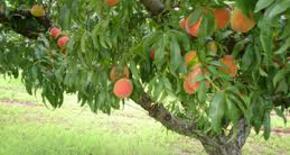
Whether you would like to grow your own cherry, pear, peach or apple trees – take care when you select your fruit trees. Make sure you select varieties that are hardy and tolerant to your growing zone. In addition, most fruit trees require a second pollinator to insure that the trees will bear fruit.
Freshly peeled apples being prepared for making fresh apple butter
For example – let’s say you like the Fuji apple variety. If you plant a single Fuji apple tree – you may be sad to find out you will never enjoy the tasty apples that so many of us love. That’s because the Fuji is a self sterile variety – and requires a second pollinator to fruit. So in order to have Fuji apples – you will need to plant a partner tree such as Gala or Granny Smith variety as well.
It may sound a bit daunting at first between selecting tolerant and partner friendly varieties – but almost all nurseries have easy to read pollination charts that can walk you through the process. And of course – don’t be afraid to ask questions – most nurseries worth their salt will have someone on staff that can guide you through the process.
TIPS TO PLANTING:
Planting a fruit tree is actually a very simple process.
As with your garden - mixing in compost in your planting hole is a great way to get your trees off to a good start!
As with your garden – mixing in compost in your planting hole is a great way to get your trees off to a good start!
Dig your planting hole about two to three times the diameter – and about 1 1/2 times the depth of the container that your tree came in. Once your hole is dug – mix back in equal amounts of compost and soil to the bottom of the hole, filling it up enough so that the top of the tree’s root ball sits about and inch or so above the top of the hole. At this point, water the root ball generously (a few gallons) – and then fill in around the rest of the hole with equal amounts of compost and soil. When your tree is completely planted – you want the base of the trunk to be just above ground level – allowing for good drainage. Apply a 2 to 3″ layer of mulch (shredded hardwood mulch, straw, or shredded leaves work well) to help the tree retain moisture and protect the root ball from winter. That’s it!
Can anything be better than a fresh fruit pie?!
You will want to water your trees for the remainder of fall – applying a few gallons around the root zone when mother nature doesn’t provide her own. If your tree is large enough – you may also want to stake it to provide protection from winter winds.
As for spacing – on average most dwarf trees should be planted about 8 to 10 feet apart – and at least 12 feet between rows. For semi-dwarfs 10 to 12 feet apart and 14 to 16 feet between rows, and for full size trees, your best bet is to read the label to make sure you leave adequate growth for specific trees.
With a little work this fall – you can be enjoying your favorite fruits for years to come!

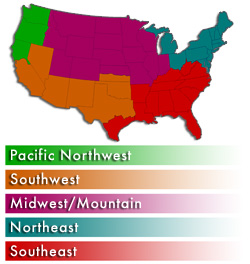
Gardening Tips for the
Southeast Region for September
Continue to harvest peppers and tomatoes and start keeping an eye out for possible frost.
Harvest herbs and store in a cool, dry place.
Clean out your vegetable garden once the plants have stopped producing. Remove any that were susceptible to disease and insects.
This month usually brings mild weather. Plant or transplant cool-weather crops such as beets, broccoli, cabbage, carrots, collards, lettuce, mustard, onions, radishes, spinach, and turnips.
With new transplants, be sure to water deeply (not lightly) every morning.
Add organic matter to all planting areas. Be sure there’s an inch-thick layer of mulch on your garden beds to control weeds.
Add leaves and organic material to your compost pile.
Cut back and remove old flower stalks from your annuals. Refertilizer them to encourage one more color before the winter.
Start preparing your flower beds for the planting of cool-season annuals.
Now is a good time to plant woody ornamentals because they have time to establish themselves before the spring.
Divide and replant perennials and bulbs that have become overcrowded or too large.
No more pruning your shrubs or trees, unless it is necessary. Pruning may encourage new growth to occur, which might be damaged during the winter.
Divide and replant crowded perennials. This is the last month to plant any new perennials and biennials.
Move your houseplants back indoors.
For healthy grass, avoid weed and feed products. Only apply herbicides to areas with weed infestations.
Fertilize lawns this month. Use a controlled-release nitrogen.

pad10.
pad10.
pad5
2026

Lawn & Garden Care
Lawn and Garden and Tips for a Waste-Free Lawn and Garden - Learn about many things you can do to reduce waste and conserve resources from caring for you lawn and garden equipment, to greenscaping.
Your Yard and Clean Air - This document provides tips on how you can prevent pollution in your own backyard by adopting practices that will help protect the environment now and in the future.
Green Landscaping with Native Plants - This site provides a wizard that answers commonly asked questions about landscaping with native wild flowers and grasses in the Great Lakes region.
The Hidden Hazards of Backyard Burning (PDF) (2 pp, 272K, About PDF) - This EPA publication (EPA 530-F-03-012) informs citizens of the health hazards of burning household waste in burn barrels and open piles and providing alternatives to burning.
Natural Landscaping - Online publication explaining natural landscaping ideas.
Greenscaping - EPA's GreenScapes Program can show you how to reduce the environmental impacts of landscaping your lawn and property by grasscycling, mulching, and composting.
Composting - Discusses what composting is, what compost can be used for, and other related topics.
Compost Yard Trimmings and Some Food Scraps - Food scraps and yard trimmings can be turned into natural additives for lawns and gardens, and can significantly reduce the amount of waste that goes in a landfill.
The Natural Landscaping Alternative: An Annotated Slide Collection - Native plants provide a beautiful, hardy, drought resistant, low maintenance landscape while benefiting the environment. This Annotated Slide Collection contains fifty slides selected for their ability to define natural landscaping and explain its benefits, to illustrate applications of natural landscaping, and to demonstrate installation and management techniques.


Collecting Compost
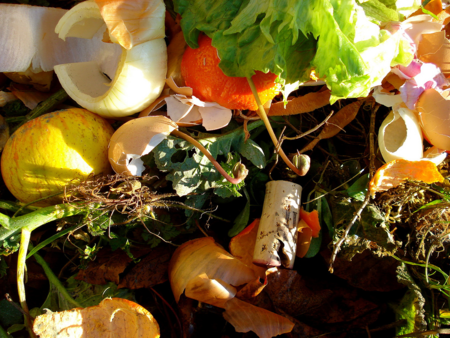
So, you just finished cooking and you have a pile of potato peels, stems and leaves. Instead of pulling out a plastic trash bag, why not dump these food scraps into your compost bin? Composting recycles organic materials that would otherwise end up in landfills, and is used to naturally fertilize gardens and farms.
In fact, composting is catching on so much that in 2009 San Francisco, California, passed legislation that makes composting mandatory for residents. Now, the city diverts 80% of its waste from the landfill, closing in on its zero waste goal by 2020.
Even if you don't live in San Francisco, you can still compost at home. Read these tips to get started.
How to compost:
First, purchase or build a compost bin in whichever size you want to use.
Next, make sure the bin has some ventilation or air holes, otherwise microbials that thrive without air will assemble, causing an unpleasant smell. In order to successfully compost and promote the growth of microbial organisms which decay the material, allow for them their essential needs: air, water and food. Proper moisture greatly affects the microorganisms, so make sure the pile remains slightly damp but never wet.
Finally, to provide proper food, make sure that there is a good mixture of live (green) materials and dead (brown) materials.
Dump the materials in your compost bin and continue to add to the container as needed. Because the compost on the bottom of the pile is the oldest and most decayed, this should be taken out for use first. For this reason, some opt for a compost bin that tumbles with the spin of a handle to avoid unevenly decayed compost. Finished compost should resemble soil and the vast majority of the individual ingredients should not be discernable.
What to compost:
Grass/plant clippings
Weeds (be careful not to compost weeds that have seeds as to not let them spread. Dead, brown weeds are always okay to compost, however)
Leaves
Kitchen wastes (peels, teabags, coffee grounds)
Woodchips/sawdust
What not to compost:
Pet wastes
Meat or bones
Chemically treated wood
Pernicious weeds (such as ivy which can withstand the conditions of composting, only to spread later)
5 Ways to "Green"
Your Garden & Lawn
Use Less Fertilizer. Excess fertilizer flows off your lawn and garden and ends up in nearby rivers, and lakes and eventually make its way to the sea. If you must use fertilizer, get a soil test first. Find out what your lawn needs. Remember that any kind of fertilizer, organic or chemical, can be over-used.
Slow Your Runoff. When all the water washes off city streets and our rooftops and yards, it carries a lot of nutrients and sediment with it. These materials can be harmlessly processed by the soils and plants on your property, but in a lake or river they can cause real problems. To slow that water down, don’t cut your grass along a creek or drainage swale. Or maybe create a water garden, which is functional—it holds and slows down stormwater—and an attractive landscaping feature. Or buy a rain barrel. The rain can then be used to water your gardens and lower your water bill.
Create Less Waste. Grass clippings are high in nutrients so you want to keep them out of the water. Use a compost bin or use a mulching mower or both. Often, mulching your grass clippings can help reduce the need for fertilizer. And it’s good to keep the nutrient-rich grass clippings and leaves out of storm drains and of ditches. Cutting your lawn high (3-4 inches) also increases its vigor, shades out unwanted weeds, and requires less water.
Use Native Plants. In general, using more native plants that are right for your part of the world reduces the need for fertilizers, pesticides and watering. Replace some of your lawn with wildflower gardens, for example.
Buy Sustainable. Although home lawn care can play a significant role in keeping fresh water clean, you can also help promote healthy land and water with your food choices: what you buy, when you buy it, and the producers you support with your purchases.

No Weeds, No Guilt.
Tips for a Toxic Free Lawn or Garden
Nothing makes a hard core green thumb madder than weeds in the lawn or garden. They're ugly. They compete for light, water, and nutrients. Sometimes they make you itch or sneeze! It's no wonder that Home Expo Mart has aisles and aisles of chemicals that you can use to kill those weeds before they take over your favorite green spot.
The problem with pesticides is that they don't stay where you put them. Every time it rains, the water runoff washes trace amounts of the chemicals away -- into the nearest creek. These pesticides add up in the water supplies downstream from you. And the green thumbs applying pesticides upstream from you... well, let's just say that here in the DC metro area, tapwater is safe to drink. But using alternative methods to kill the weeds in your lawn and garden is responsible behavior.
Here are a few tips for nontoxic alternatives to chemical pesticides that can help you have the lawn or garden of your dreams:
Tip #1: Corn Gluten Meal
If you have a well established lawn or perennial garden, you can prevent weeds from growing by with an application of corn gluten meal in early spring. Corn gluten meal is nontoxic and has no effect on plants that are already established. It does, however, prevent the proper root formation of weed seedlings that would otherwise germinate in the spring and try to take over your lawn. It is one tool that will help you do your part to protect nature.
Tip #2: White Vinegar
You've probably heard the saying "you catch more flies with sugar than with vinegar." Here's a little secret: Vinegar repels weeds, too. You can kill almost any plant by applying white vinegar, especially if they are in a sunny location.
Think of using vinegar where you might otherwise spot spray an herbicide. As with herbicides, vinegar may need to be applied more than once to get the job done. But be careful! Vinegar will not discriminate between the plants you want and the ones you don't.
However, you can save money by buying the least expensive, largest container of white vinegar you can find. This will be much less expensive than the typical cost of herbicides.
Tip #3: Use Landscaping Fabric
For planting beds, barrier methods such as landscaping fabric to keep weeds from growing are especially effective. Applying landscaping fabric around existing plants is easy and effective -- it blocks the light from reach the soil, preventing weeds from growing. Cut holes in the fabric before you place it over existing plants. The fabric blocks the light, but don't worry, it lets the water through.
Tip #4: Pull!
If you catch them early, most weeds are easy to pull. It's only after you neglect your garden for a bit that removing the weeds becomes a chore. Go out in the morning, when there is dew to moisten the soil and to make weed pulling easier. Similarly, pull weeds after a rainstorm. You will find that roots come out fairly easily when the soil is moist. You also might to invest in some simple weed pulling tools to help you effectively get roots out of the ground. Any good lawn and garden center will carry these. Foam pads for kneeling when you are weeding also make the task more comfortable.
In closing, many safe options exist when you are seeking to eradicate weeds from your landscape. Corn gluten meal is good for your lawn. Vinegar will get your weeds. Landscaping fabric prevents them from growing, and you can pull weeds when the soil is wet and it is easiest to do so. Enjoy responsible gardening so that your family and pets are not exposed to harmful herbicides.
So now you've dealt with your weeds. You've followed these tips. And now it's time to relax and enjoy the rewards! Next time your guests are over for that backyard cookout, enjoy the admiration they express over that lush green grass you've worked so hard to care for. Then, tell them about these extra steps you've taken to do your part for the environment and watch the look on their faces.
Organic Lawn Care:
Gardening Without Chemicals
So, you've finally decided to toss all those unhealthy chemicals from your garden storage shed and begin practicing organic lawn care. Congratulations. This decision is a much more environmentally friendly one, and can help you greatly decrease your carbon footprint. There is one problem though; your garden has been steadily fed a diet of chemical for years, and it won't be easy to switch from chemicals to organic during the first season.
Think of your garden as a finicky child. If the child becomes used to eating ice cream and candy at every meal, how will he feel when you set a plate of green beans and chicken in front of him? He's going to baulk at the very thought. Your lawn may act the same way, but with the following organic care rules, you will be able to convince your lawn to adopt a healthier diet so you can grow happy and healthy plants.
Organic Lawn Care Rules
Feed Your Soil- In order to grow healthy plants in your garden, your soil needs to be balanced and contain the correct nutrients. This will allow it to supply your plants with what they need to properly grow. Years of using chemicals to fertilize your plants and keep bugs and weeds at bay have most likely left your soil in very poor shape. Even if your lawn looks lush and green, it is only so because of the massive amount of nitrogen present in chemical fertilizers. The first step to take to ensure a healthy lawn is to do away with all those chemicals.
Rake- Grab your rake from your metal shed and use it on your lawn to get rid of any thatch that might be present. Thatch includes all of the dead leaves and grass your mower leaves behind that sits on top of the soil's surface. While worms and bacteria would normally take of this thatch over time, any chemicals you have used will have depleted their population. Because of this, the thatch will have most likely become too thick to allow water to be absorbed into the soil. Rake the thatch into your compost pile, so it can be used later to insulate the roots of your plants from hot and cold temperatures and reduce your grass's need for water in dry spells.
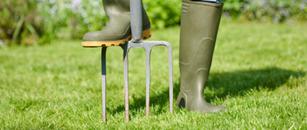
Aerate- If you are fortunate enough to have an aerator in your garden shed, great! If not, you can rent one from almost any home improvement or garden store. An aerator will poke tiny holes in your lawn, allowing air and water to reach the roots of grass and plants.
Add Organic Material- When you are done aerating, begin adding organic material like compost manure to your lawn. You can purchase large bags at most garden centres and store them easily in your garden buildings. This manure will be finely ground chicken, cow, or horse droppings that are able to re-introduce nutrients into your soil. While these nutrients would normally be sustained by insects, worms, bacteria, and fungi, they have most likely been eliminated by the chemical used in your garden. Next, cover the soil and manure with organic fertilizer. This type of fertilizer is generally made from chicken manure or bloodmeal that releases nutrients slowly into the ground, attracting bacteria, worms, and fungi to increase the health of your soil.
If you are tired of using harmful chemicals to treat your lawn, use these organic lawn care rules to create a healthier and happy garden full of plants.